How to Choose the Right Wedding Photographer for You
Choosing a wedding photographer can feel strangely difficult.
You can compare portfolios. You can read reviews. You can scroll through Instagram until every wedding starts blending into one enormous, beautifully styled celebration. But how do you determine what it will actually feel like to have a particular photographer beside you on your wedding day, or whether the photographs they deliver will tell the whole story rather than only showing the prettiest five minutes of it?
The right questions can tell you much more than how many weddings someone has photographed or whether they have worked at your venue before. They can reveal how a photographer prepares, communicates, responds when plans change, protects your photographs, and treats the people you love.
Because wedding photography is about more than finding someone who can make a beautiful portrait.
Your photographer will be present for quiet nerves before the ceremony, complicated family dynamics, wildly unpredictable weather, tearful hugs, packed dance floors, and moments you may not even realize happened until you see your gallery. Their priorities will shape not only what gets photographed, but also how supported and comfortable you feel throughout the day.
So instead of giving you a list of questions to ask simply so you can check a box, we want to help you understand why each answer matters—and what you should listen for when a photographer responds.
Here are 10 questions to ask a wedding photographer before you book.
1. Will the people we meet be the photographers who actually photograph our wedding?
This may sound obvious, but it is one of the most important things to clarify.
Some photography companies are built around one recognizable photographer but assign weddings to associate photographers. Other photographers hire a different second shooter for every event. Neither structure is automatically wrong, but you deserve to know exactly who will be present and whose work you are reviewing before signing a contract.
Ask whether the people on your consultation call will photograph your wedding, who selects any additional photographers, and whether you can see galleries created by the exact team assigned to you.
Consistency matters. So does trust.
Your photographers will spend much of your wedding day close to you and the people you love. Meeting the actual humans behind the cameras gives you the opportunity to determine whether their personalities, communication style, and energy feel right, not just whether you like their portfolio.
Our approach
When you hire The MacMeekens, you get both of us: Christina and Will. We are a husband-and-wife team, and both of us are lead photographers, not a primary photographer paired with a last-minute assistant.
Every wedding collection includes the two of us for full-day coverage because two experienced perspectives allow us to tell a much fuller story. While one of us is photographing the visible moment, the other can watch for the reactions unfolding across the room. One can stay close without requiring the other side of the story to go undocumented.
2. Can we see several complete wedding galleries, not just portfolio highlights?
A portfolio is designed to show a photographer’s strongest individual images. A complete gallery shows how that photographer handles an entire wedding.
Ask to see more than one full gallery, ideally from celebrations with different lighting, timelines, guest counts, cultures, or locations. Look beyond the couple’s portraits and pay attention to the less glamorous parts of the day:
- Are skin tones consistent in different lighting conditions?
- Can the photographer work in a dark getting-ready suite?
- Do midday outdoor photographs still look intentional?
- Are family photographs organized and well lit?
- Does the ceremony feel complete?
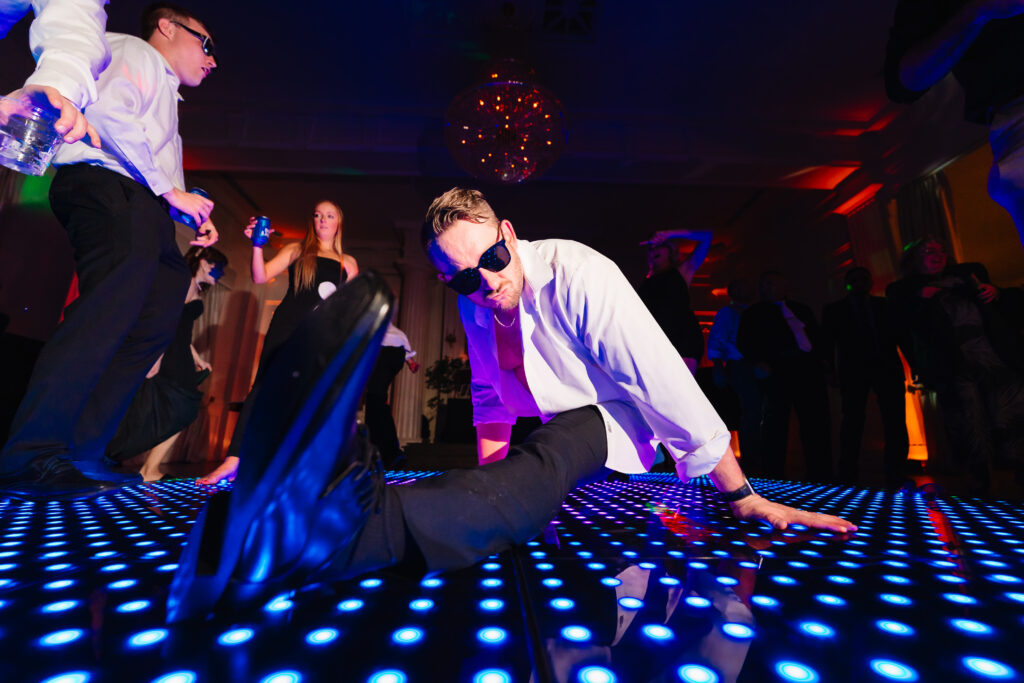
- Can they preserve the atmosphere of a candlelit dinner or a chaotic dance floor?
- Do the photographs include guests, relationships, and meaningful reactions, or mostly details and portraits?
A wedding does not happen entirely during golden hour. Your photographer should be able to create thoughtful, consistent work when the light, weather, or surroundings are less than ideal.
Styled shoots and editorial sessions can be beautiful, but they do not demonstrate how someone handles the pace and unpredictability of a real wedding day. A complete gallery does.
Our approach
We describe our work as bold, vibrant, true-to-color documentary photography. But those words should mean something when you look through an entire gallery, not only when you see a carefully selected Instagram post.
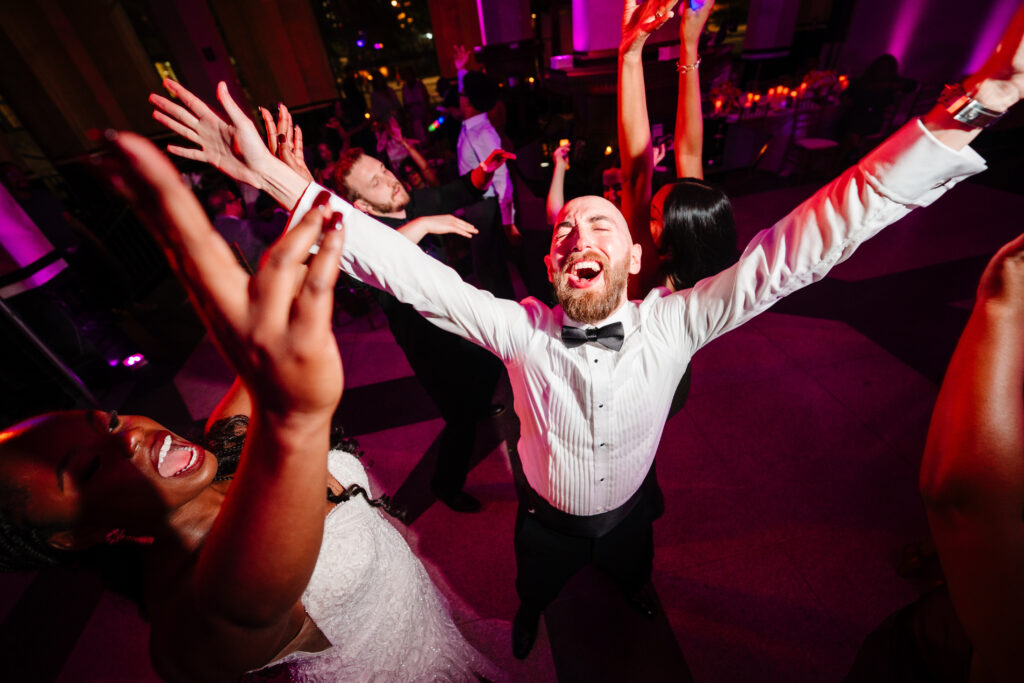
Our goal is to preserve the day as it actually felt: the people, the energy, the color, the quiet, the chaos, and all the interactions happening around you. Some moments feel cinematic. Others feel bright and joyful. The light and atmosphere may change throughout the day, but the people should always look like themselves.
3. How do you balance documentary photography with guidance and portraits?
“Documentary” and “candid” have become popular wedding-photography buzzwords, but photographers often mean very different things when they use them.
Some documentary photographers remain almost completely hands-off. Some photographers direct nearly every movement while describing the results as candid. Most couples want something between those extremes: space to experience their wedding without turning it into an all-day photo shoot, along with enough guidance that portraits do not feel awkward or directionless.
Ask a photographer what their approach looks like during different portions of the day.
- How do they handle getting-ready photographs?
- Will they help during couple’s portraits?
- How do they organize family photographs efficiently?
- Do they interrupt real moments to recreate or perfect them?
- How do they work with people who feel uncomfortable in front of a camera?
The photographer’s answer should help you imagine how their presence will affect your experience.
Our approach
We never expect our couples to know what to do with their hands, or to perform a version of themselves for the camera all day.
During portraits, we offer direction, movement, and prompts when they are helpful. We pay attention to what makes each couple comfortable, and we create enough structure for you to relax without forcing you into poses that do not feel like you.
During the rest of the day, we allow moments room to happen. We watch. We anticipate. We learn who your people are and notice the relationships developing around us. We are not trying to manufacture a “perfect” wedding for photographs. We are trying to preserve the honest, beautiful, occasionally hilarious celebration you are actually having.
4. How do you photograph difficult lighting, unexpected weather, and changing plans?
Rain happens. Timelines run behind. Outdoor ceremonies take place in blazing midday sunlight. Reception spaces are sometimes darker than expected. A zipper breaks, a shuttle gets delayed, or a speech runs much longer than anyone planned.
Wedding experience is not only about knowing how to use a camera when everything is going smoothly. It is about being able to make thoughtful decisions when it is not.
Ask potential photographers to show you examples from:
- Dark indoor spaces
- Harsh midday sunlight
- Rainy or overcast weddings
- Nighttime portraits
- Dimly lit receptions
- Fast-moving dance floors
You can also ask them to describe a time when a wedding-day plan changed unexpectedly and how they responded.
You are not looking for a photographer who promises that nothing will go wrong. You are looking for someone who can adapt calmly, collaborate with your vendor team, and continue creating meaningful photographs without making the disruption feel bigger than it is.
Our approach
We have photographed weddings in Texas thunderstorms, historic European heat, tiny rooms, dark churches, crowded dance floors, and timelines that enthusiastically abandoned the original plan.
Our philosophy is simple: the timeline is a guide, not a prison.
We prepare carefully, bring the lighting tools needed for changing environments, and communicate closely with planners and vendor teams. When circumstances shift, our job is to adapt without transferring that stress to you. Your wedding does not become less meaningful because the weather changed or dinner started late, and your photographs should not suggest otherwise.
5. What is included in the collection, and how much coverage do you recommend?
Wedding photography packages can be difficult to compare because the number at the bottom rarely tells the whole story.
Ask for a clear explanation of what is included:
- How many hours of coverage are provided?
- Is a second photographer included or available as an add-on?
- Are travel fees included?
- Is an engagement session included?
- Will you receive high-resolution digital files?
- Are printing rights included?
- Are albums or prints included, or required separately?
- Is sales tax included?
- What happens if the wedding runs longer than expected?
It is also worth asking how the photographer determines the amount of coverage they recommend. A collection should support the story and experience you want, rather than forcing the most meaningful parts of your day into a predetermined hourly box.
Before comparing pricing, make sure you are comparing the same level of coverage, experience, service, and deliverables.
Our approach
Every MacMeekens wedding collection includes full-day coverage with both of us.
We chose that structure because we do not believe the value of your story begins when the ceremony starts or expires immediately after the scheduled final dance. Some of the most revealing photographs happen during the pre-wedding shenanigans, while your people are helping you get ready, or late in the evening when everyone has forgotten about the cameras.
Full-day coverage gives the celebration room to breathe. It also allows us to build a timeline around your actual priorities rather than asking you to make meaningful decisions based on whether enough photography hours remain.
6. Will there be a second photographer, and who will that person be?
A second photographer can offer much more than additional photographs.
Two skilled photographers can document simultaneous preparations, photograph a ceremony from multiple perspectives, preserve your reaction and your partner’s reaction, and watch for meaningful interactions happening away from the obvious action.
But the phrase “second photographer” can describe very different arrangements. Ask:
- Is the second photographer included?
- Is this person a regular member of the team?
- How experienced are they?
- Will they photograph independently or primarily assist the lead photographer?
- Can you see images or full galleries that reflect both photographers’ work?
A second photographer should add another trusted perspective—not simply another camera in the room.
Our approach
Will and Christina have photographed side by side for over 13 years. We know how the other person anticipates a moment, where each of us is likely to stand, and when the story needs us in two different places.
That rhythm allows us to work independently without producing two disconnected versions of the day. The final gallery is one cohesive story, told through two equally invested perspectives.
7. How do you prepare for our timeline, family dynamics, traditions, and priorities?
Photography preparation should involve much more than receiving an address and arrival time.
Ask what communication looks like between booking and the wedding. Does the photographer learn which people and relationships matter most to you? Will they collaborate with your planner? Do they help build or review the photography timeline? How do they learn about religious or cultural traditions they may not already know?
This is also a good opportunity to discuss:
- Divorced, estranged, or complicated family relationships
- Accessibility and sensory needs
- Pronouns and chosen family
- Traditions or moments that require particular reverence
- Privacy preferences
- Grief, absent loved ones, or emotionally sensitive circumstances
- Your comfort with touch, posing, and public affection
You should never have to disclose more than you want. But your photographer should create a safe, respectful way for you to share information that will help them care for you and your people well.
Our approach
Every couple enters a wedding with their own relationships, histories, traditions, needs, and definition of family. We do not arrive assuming every wedding, or every couple, should function the same way.
We take time to understand what matters to you, collaborate with your vendor team, and prepare for the logistical and human dynamics surrounding the day. That includes respecting cultural and religious traditions, working thoughtfully with neurodivergent clients and guests, using affirming language, and making space for chosen family in all its forms.
The more context we understand, the less you have to manage us on your wedding day. You can be present. We can pay attention.
8. What backup equipment and image-protection systems do you use?
Beautiful work matters. Protecting that work matters just as much.
Professional wedding photographers should have backup camera bodies, lenses, flashes, batteries, and memory cards. Equipment can fail, and there may not be time to stop a ceremony while someone troubleshoots a camera.
Ask how photographs are recorded during the wedding and how files are protected afterward. Many professional cameras can write each image to two memory cards simultaneously, creating an immediate duplicate. After the wedding, photographers should have a clear process for backing up files in multiple places before formatting or reusing cards.
You do not need to understand every piece of equipment or storage terminology. What matters is that the photographer can explain their system clearly and confidently.
Our approach
We are rock climbers, which means we’re firm believers in redundancy—especially when it comes to something as important as our lives or photographs of memories that can never be recreated.
On a wedding day, you have two lead photographers on site: Christina and Will. We each carry two cameras, and every camera records each photograph to two memory cards simultaneously. This is called dual-card recording, and it means every frame we capture is immediately written to two separate places.
We also carry backup camera bodies, lenses, lighting equipment, batteries, memory cards, and stands so that an equipment failure never prevents us from continuing to photograph your celebration.
After every wedding, we immediately copy the photographs to multiple locations: our computer, a solid-state working drive, long-term storage, and a secure online cloud service. We do not erase or reuse the original memory cards until those backups have been completed and verified. If one device or storage location ever fails, another copy remains protected.
9. What happens if you become sick or have an emergency?
No photographer can guarantee that they will never become ill, experience a family emergency, or encounter a travel disruption. They should, however, have a professional contingency plan.
Ask whether they maintain relationships with trusted photographers who could step in, how a replacement would be selected, and what the contract says about emergencies or circumstances beyond anyone’s control.
This is another reason to understand whether you are hiring an individual, an established team, or a larger studio. The answer may look different for each business model, but it should never be “we’ll figure it out if it happens.”
You can also confirm that the photographer carries business and liability insurance and can provide a certificate of insurance if your venue requires one.
Our approach
Over our 13 years in the wedding industry, we have built a trusted professional network throughout DFW and abroad through local leadership positions, continuing education, and our creative communities.
We maintain a carefully selected group of emergency contacts who share a similar documentary approach, have studied under many of the same educators, and, in several cases, have trained directly alongside us. If an emergency ever prevented one or both of us from photographing a wedding, we would draw from that trusted network to find the most qualified replacement available, never simply send an unfamiliar photographer in our place.
10. When and how will we receive our photographs, and what rights will we have?
Before booking, make sure the contract clearly explains what happens after the wedding.
Ask:
- When will sneak peeks be delivered?
- What is the contracted turnaround time for the complete gallery?
- How will the photographs be delivered?
- Approximately how long will the gallery remain online?
- Can you download high-resolution and web-size files?
- Will the photographs contain watermarks?
- Do you receive personal printing rights?
- Are albums or print purchases required?
- How long does the photographer retain the files?
- What privacy or image-use options are available?
Photographers generally retain copyright to the images they create, while clients receive a personal-use or print release. The contract should explain what you are permitted to download, share, and print, along with how the photographer may use the photographs.
It is also worth asking what “editing” includes. Every delivered photograph should be thoughtfully color-corrected and finished in the style represented in the photographer’s portfolio. More extensive retouching, body modification, object removal, or delivery of unedited RAW files may fall outside the contracted service.
Our approach
Our couples receive sneak peeks within one week and their complete gallery within 90 days. The final photographs are delivered through an online gallery and edited consistently in our true-to-color style.
We want you to see your people as they looked and your celebration as it felt—not a heavily filtered version of either.
One more question couples rarely ask—but probably should
What do you value most on a wedding day?
Technical experience, contracts, backup equipment, and delivery timelines all matter. But this answer may tell you more about a photographer than anything else on the list.
What are they watching for when they enter a room? What makes an image important to them? Are they most excited by elaborate details, polished portraits, emotional reactions, family relationships, fashion, architecture, or the energy of a celebration?
There is no single correct answer. The goal is to determine whether their priorities align with yours.
We value people.
We value the way your partner looks at you when no one is giving instructions. The friend who quietly fixes your clothes before the ceremony. The parent trying very hard not to cry. The children making their own entertainment under the dinner table. The laughter that interrupts a perfectly composed portrait and instantly makes it better.
We believe beautiful photographs matter. But if the final gallery does not feel like you and your people—if it does not preserve the relationships, emotion, personality, and atmosphere that made the celebration yours—we have missed the point.
You should love their work, but you should also trust their process.
How do you know when you have found the right wedding photographer?
The right photographer should be able to show you complete, consistent galleries and answer practical questions without becoming defensive or evasive. Their communication should make you feel informed. Their personality should help you relax. Their priorities should reflect what you want to remember.
Most importantly, you should feel confident that you can experience your wedding fully while they take care of preserving it.
You do not need to hire the photographer with the longest résumé, the largest Instagram following, or prior experience at every venue you are considering. You need photographers whose work moves you, whose preparation gives you confidence, and whose presence feels right around the people you love.
Frequently asked questions about hiring a wedding photographer
Many established wedding photographers book 12 to 15 months in advance, particularly for popular spring and fall dates. If photography is one of your highest priorities, begin reaching out after your date and venue—or firm location—are established. Destination celebrations and multi-day weddings may require additional lead time for travel planning.
Prior venue experience can be helpful, but it should not be a deciding factor. A skilled wedding photographer should know how to assess light, scout locations, communicate with the vendor team, and adapt to an unfamiliar environment. Ask to see complete galleries from venues with similar lighting or logistical challenges rather than limiting your search to photographers who have already worked in one specific building.
Two photographers are especially valuable when preparations happen in different locations, the guest list is large, the timeline contains simultaneous events, or you want multiple perspectives during the ceremony and reception. The experience and working relationship of those photographers matters more than simply adding another person with a camera.
Look for consistency across the entire day. Pay attention to skin tones, changing light, family photographs, ceremony coverage, guest reactions, nighttime images, and the dance floor. A strong gallery should feel like a complete story—not a small collection of portraits surrounded by repetitive filler.
Professional photographers generally do not deliver RAW files because those files are unfinished materials rather than the completed work represented in the portfolio. Instead, confirm that your contract explains how the final photographs will be selected, edited, delivered, and archived.
Looking for documentary wedding photographers in Dallas, or wherever your story takes you?
We are Christina and Will MacMeeken, a husband-and-wife photography team based in Dallas–Fort Worth and traveling worldwide.
Every wedding collection includes both of us, full-day coverage, and a deeply personalized experience from the first conversation through the final gallery. Our work is bold, colorful, true to life, and centered on genuine storytelling: the beautiful portraits, absolutely, but also the interactions and wonderfully human moments that make the photographs feel like your people and your story.
We work collaboratively with couples and their vendor teams, celebrate LGBTQIA+ couples and families, approach cultural and religious traditions with care, and create a camera experience that is supportive rather than performative.
If that sounds like the kind of photography experience you have been searching for, explore our wedding portfolio or reach out to tell us what you are planning. We would love to hear about the people, priorities, and celebration at the center of it all!
Candid Wedding Moments We Love